If you’ve searched for farmers carry chances are you want one of three things: stronger grip, a tougher “all-round” body, or better performance in training (including HYROX). Good news: the farmers carry exercise is one of the simplest ways to build strength, conditioning, and real-world athleticism without complicated techniques.
In this post, I’ll explain exactly why it works, how to do it, what muscles it trains, what weights to use (including hyrox farmers carry guidance), and how to plug it into your week.
I’m Kayvan, a UK-based professional personal trainer. I coach clients through Personal Training, Sports Performance, Online Live Coaching, and Human Performance Testing, so this comes from what I see working with real people, not just theory.
What is a farmers carry (and why it’s called that)?
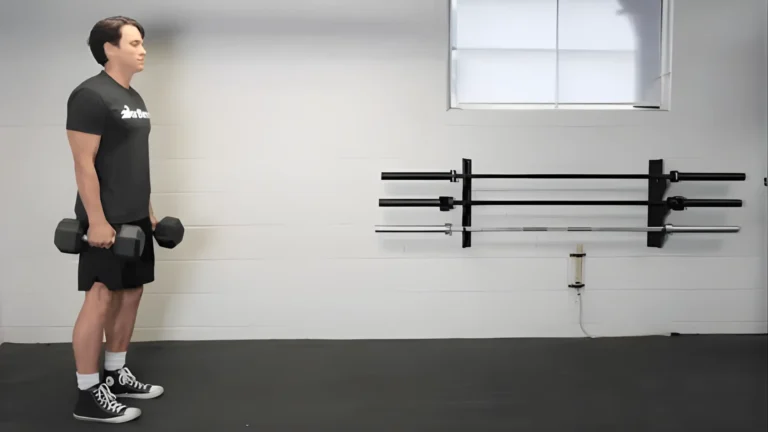
A farmers carry (also called a farmers walk) is as straightforward as it sounds: you pick up heavy weights in each hand, stand tall, and walk for a set distance or time. The “farmer” name comes from carrying loaded buckets, tools, or feed across fields. In the gym, we copy that pattern with Dumbbells, kettlebells, trap bars, or dedicated farmers walk equipment.
The reason it’s so effective is that it trains a bunch of systems at once: grip, trunk (core), upper back, hips, legs, posture, and even breathing under load. That’s why it shows up in strength training, athletic prep, and endurance events like HYROX.
Farmers walk muscles worked (what you’re actually training)
People ask me “farmers walk muscles worked — is it just grip?” Grip gets the spotlight, but the carry is a full-body drill.
You’ll feel it in:
- Hands + forearms (grip endurance and crushing strength)
- Upper back (traps, rhomboids, lats stabilising the shoulder blades)
- Core (especially obliques and deep trunk muscles resisting sway)
- Glutes + hamstrings (hip stability and stride control)
- Quads + calves (repeated steps under load)
- Posture muscles (keeping ribs stacked and shoulders in place)
That mix is why the carry is such a good “return on effort” exercise.
7 farmers carry exercise benefits
1) Grip strength that actually transfers to life (and your lifts)
Grip isn’t just for deadlifts — it’s for pull-ups, kettlebell work, rowing, climbing, even holding form in pressing. The farmers carry weight you can manage over time builds a type of grip endurance that barbell holds don’t always hit.
Practical tip: If your grip fails first, keep the load but shorten the distance, or do multiple shorter carries with brief rests.
2) A stronger core without endless crunches
Carrying heavy weights while walking forces your trunk to stabilise against rotation and side-bending. That’s real-world core work. The carry is basically “anti-movement” training: you stay tall, ribs down, pelvis steady.
If you’ve tried a farmers carry one arm (suitcase carry), you’ll know it lights up the obliques fast. One-arm carries are brilliant for people who want better core control and posture, or who get back tightness with traditional ab work.
Go-to cue: “Walk like you’ve got a glass of water on your head.”
3) Better posture and shoulder stability
Most people live in a world of phones, laptops, and hunched shoulders. Carries teach you to pull the shoulders gently down and back while keeping ribs stacked. This builds upper-back strength and shoulder control without complicated movements.
If your shoulders shrug up: go a bit lighter and focus on “long neck, shoulders heavy”.
4) Conditioning without wrecking your joints
A farmers carry workout can hit your heart rate hard without pounding your knees like a run. It’s loaded walking — simple, scalable, and generally friendly on joints when you progress sensibly.
If you’re building fitness for HYROX, carries are a solid way to condition under load while practising calm breathing and posture.
5) Stronger legs and hips (yes, really)
It may not look like a leg exercise, but walking under load forces the hips and legs to work overtime. You’re essentially doing hundreds of mini single-leg stabilisation reps. This is useful for runners, field sport athletes, and anyone who wants sturdy hips and knees.
This is also where Sports Performance training benefits: carries build “durable” legs that can handle repeated effort.
6) More resilience for HYROX farmers carry
For HYROX, the carry isn’t just strength — it’s how you handle fatigue. The hyrox farmers carry tests your ability to keep moving while loaded, with good posture and steady breathing.
A lot of people ask me about hyrox farmers carry weight or farmers carry hyrox weight. Exact weights can vary by division and event updates, so treat this as training guidance rather than a fixed rule:
- Most competitors do best when they practise slightly heavier than race load for short distances, and race-like load for longer repeats.
- You want your training to cover both: “heavy and short” + “moderate and repeatable”.
Simple HYROX carry session (conditioning focus):
- 6–10 rounds
- 20–30 metres carry
- 30–45 seconds easy walk/rest
Keep technique clean the whole time.
If you want precise, personalised numbers, that’s where Human Performance Testing helps — we can test grip endurance, movement efficiency, and threshold pacing, then build the carry around your actual weak points.
7) It’s one of the easiest exercises to progress
The carry is simple to track and improve. You can progress by:
- Increasing farmers carry weight
- Increasing distance
- Increasing time
- Reducing rest
- Improving posture and speed with the same load
That makes it easy to run as a “12-week carry plan” alongside your normal training.
Farmers walk equipment options (and what I recommend)
You don’t need fancy kit, but the tool changes the feel.
Common options:
- Dumbbells: easy and accessible; good starting point
- Farmers carry kettlebell / kettlebell farmers walk: more grip demand due to thicker handles; great for posture
- Trap bar: lets you load heavy with a stable centre of mass
- Dedicated farmers handles: best “true carry” feel if your gym has them
- Sandbags: awkward load = extra trunk demand
If you’re training at home, kettlebells and adjustable dumbbells cover most bases.
Farmers walk for how long?
This depends on your goal. Here are the ranges I use with clients:
For strength + grip
- 10–30 metres per set
- 3–6 sets
- Rest 60–120 seconds
For muscle + posture
- 20–40 metres per set
- 3–5 sets
- Rest 60–90 seconds
For conditioning (including HYROX-style)
- 20–60 metres per rep, repeated in rounds
- 6–12 total reps
- Rest 20–60 seconds
If you prefer time instead of distance:
- Strength: 10–20 seconds
- Muscle: 20–40 seconds
- Conditioning: 30–60 seconds
Pick one style and run it for 4–6 weeks before changing it.
How to do the farmers carry exercise properly (step-by-step)
- Pick the weights and place them by your feet
- Brace and hinge slightly (like a deadlift setup)
- Stand up tall — don’t yank
- Shoulders down, ribs stacked — no over-arching
- Walk with short, controlled steps
- Breathe through the nose if you can (or calm mouth breathing under load)
- Turn safely — slow down, pivot, and continue
- Finish by placing the weights down under control (don’t drop if your gym won’t like it)
Quick form checks I use:
- Are you leaning back? (Go lighter, ribs down.)
- Are your shoulders creeping up? (Reset posture, reduce load.)
- Are you wobbling side to side? (Shorter steps, brace harder, maybe do suitcase carries.)
Farmers carry alternative options (if you can’t do the standard version)
Sometimes wrists, shoulders, or space make carries tricky. Here are solid farmers carry alternative options:
- Suitcase carry (one arm): same benefits, more core challenge (farmers carry one arm)
- Rack carry (front rack kettlebells): harder on core and breathing
- Overhead carry: shoulder stability focus (start light)
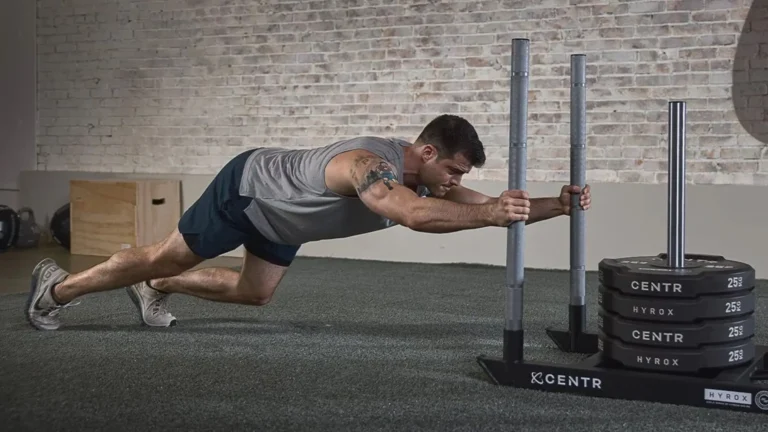
- Sled push/pull: similar conditioning + leg drive, less grip
- Static holds: if walking bothers your back or you’ve got limited space
- Towel grip dead hangs or rows: if you specifically need grip work
If you’ve got pain, don’t “push through” blindly — get it assessed and modify intelligently.
Farmers carry kettlebell tips (because kettlebells feel different)
A farmers carry kettlebell or kettlebell farmers walk often feels harder than dumbbells at the same weight because the handle is thicker and the bell may swing slightly.
Tips:
- Keep the bell close to your body (avoid letting it drift out)
- Keep steps short and quiet
- If it swings, slow down and tighten your trunk
Farmers carry by age chart female (what to aim for)
People often search “farmers carry by age chart female” hoping for a simple standard. Realistically, carry strength depends on bodyweight, training history, grip, and even hand size. Instead of a strict chart, I use practical targets that scale well:
Beginner targets (female clients)
- Start with two kettlebells or dumbbells you can carry for 20–30 metres with good posture
- Aim to build up to 40–60 metres total per session (split across sets)
Intermediate targets
- Carry a total load around 50–75% of bodyweight (split between both hands) for 20–30 metres, with clean posture
Performance targets
- For stronger trainees, bodyweight total load for short carries is a solid milestone, but only if technique stays clean and you’re not compensating
If you want numbers that actually mean something for you, testing is the answer. With Human Performance Testing, I can assess grip endurance, walking efficiency under load, and where posture breaks down — then we set targets that match your body, not a generic table.
Sample farmers carry workout (3 options)
Option A: Strength and grip (10–15 minutes)
- 5 sets of 20 metres heavy carry
- Rest 90 seconds
Add 1–2 kg per hand when all sets feel controlled.
Option B: Gym finisher (8–12 minutes)
- 4 rounds:
- 30 metres carry
- 10 push-ups
- 10 goblet squats
Rest 60 seconds between rounds.
Option C: HYROX carry builder (race-relevant conditioning)
- 8–12 reps of 25–40 metres
- Rest 20–45 seconds
Keep posture the priority. If you’re collapsing, it’s too heavy or rests are too short.
Want help applying this to your training (and HYROX goals)?
If you want a farmers carry workout that fits your body, your schedule, and your goals — whether that’s fat loss, strength, or a better hyrox farmers carry — I can help you build it properly.
- Personal Training: in-person coaching to dial in technique, progression, and strength work
- Sports Performance: carries programmed around speed, power, and repeat-effort fitness
- Online Live Coaching: real-time sessions wherever you train, with feedback on form and pacing
- Human Performance Testing: grip endurance, movement efficiency, and conditioning benchmarks so your plan is based on data, not guesswork
If you’re ready, explore the service that matches your goal and let’s get your carries (and everything around them) moving in the right direction.
FAQ’s
Is farmers’ walk the same as farmers carry?
Yes — farmers walk and farmers carry are used interchangeably. Some people say “carry” for time/distance and “walk” as the general name, but it’s the same movement pattern.
How heavy should farmers carry weight be?
You should be able to walk tall without leaning back or shrugging. If you’re new, start lighter than you think and build up weekly. For strength, go heavy enough that 20 metres feels tough but controlled. For conditioning, pick a load you can repeat without form falling apart.
What’s better: dumbbells or kettlebells?
Both work. Dumbbells are stable and easy to load. A farmers carry kettlebell tends to challenge grip and trunk control more. I often rotate them depending on the goal.
How often should I do farmers carries?
1–3 times per week works for most people. If you’re training for HYROX, 2 times per week is a strong place to start — one heavier/shorter day and one conditioning/repeat day.
Can farmers carry help with back pain?
They can help some people by improving posture and trunk strength, but they can also aggravate symptoms if the load is too heavy or you lean back. If you have back pain, start light, keep ribs stacked, and consider suitcase carries first. If in doubt, get coaching.