There’s something powerful about slowing down.
In a world where we’re constantly rushing between work, family commitments and notifications that never seem to stop, our nervous systems rarely get a break. As a coach working in Personal Training, Sports Performance and Human Performance Testing, I often see clients who aren’t just physically tight they’re mentally overloaded. Their shoulders are up around their ears, breathing is shallow, and stress has quietly become their “normal”.
That’s where chair yoga exercises come in.
You don’t need a yoga studio. You don’t need to be flexible. You don’t even need to get down on the floor. With just a sturdy chair and a few minutes of focused movement and breathing, you can reduce stress, ease anxiety, improve posture and gently increase mobility.
Chair yoga is accessible to all ages and fitness levels. It’s ideal for beginners, office workers, people recovering from injury, and especially those looking for safe chair exercises for seniors. Whether you’re exploring armchair yoga for seniors, starting a light chair yoga workout, or simply curious about what is chair yoga, this guide will walk you through everything you need to know.
Let’s start from the beginning.
What Is Chair Yoga?
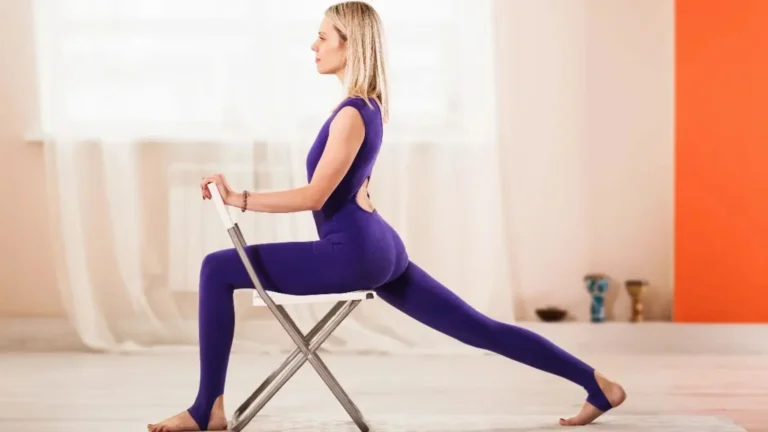
If you’ve ever wondered what is chair yoga, the answer is simple: it’s yoga adapted to be performed while seated or using a chair for support.
Traditional yoga poses are modified to be done safely and comfortably from a seated position. In some cases, the chair is used as a prop for balance during standing movements.
Think of it as yoga from a chair — maintaining the same principles of breath awareness, gentle stretching and mindful movement, but without the strain of getting up and down from the floor.
From my experience coaching a wide range of clients from young athletes to older adults, accessibility is often the biggest barrier to movement. When something feels intimidating, people avoid it. Chair yoga removes that barrier.
It says:
“You can start exactly where you are.”
The Benefits of Chair Yoga Exercises (Mental & Physical)
One of the reasons I regularly recommend chair yoga routines to clients is that they offer both physical and psychological benefits.
Let’s break it down.
Mental Benefits
| Benefit | How Chair Yoga Helps |
| Reduces stress | Slow breathing activates the parasympathetic nervous system (rest and digest response). |
| Eases anxiety | Gentle movement combined with breath lowers heart rate and muscle tension. |
| Improves focus | Mindful movement increases body awareness and present-moment attention. |
| Better mood | Light activity stimulates endorphins without overwhelming the system. |
When we’re stressed, our bodies tighten. The neck stiffens, the jaw clenches, and breathing becomes shallow. Over time, this creates a feedback loop — physical tension reinforces mental stress.
Chair yoga interrupts that loop.
Physical Benefits
- Improves posture (especially for desk workers)
- Increases shoulder and spinal mobility
- Reduces neck and upper back tension
- Supports joint health
- Encourages circulation
- Builds gentle strength
For older adults, particularly those exploring armchair yoga for seniors, these movements can help maintain independence and reduce stiffness without putting strain on the joints.
I’ve worked with clients in their 60s and 70s who started with simple seated mobility work and reported sleeping better within weeks. It’s not about intensity. It’s about consistency.
Gentle Seated Stretches to Release Neck, Shoulder & Back Tension
This is often where I begin a chair yoga workout — releasing upper-body tension.
Before you start:
- Sit tall with both feet flat on the floor.
- Keep your spine upright but relaxed.
- Rest your hands on your thighs.
- Breathe slowly through your nose.
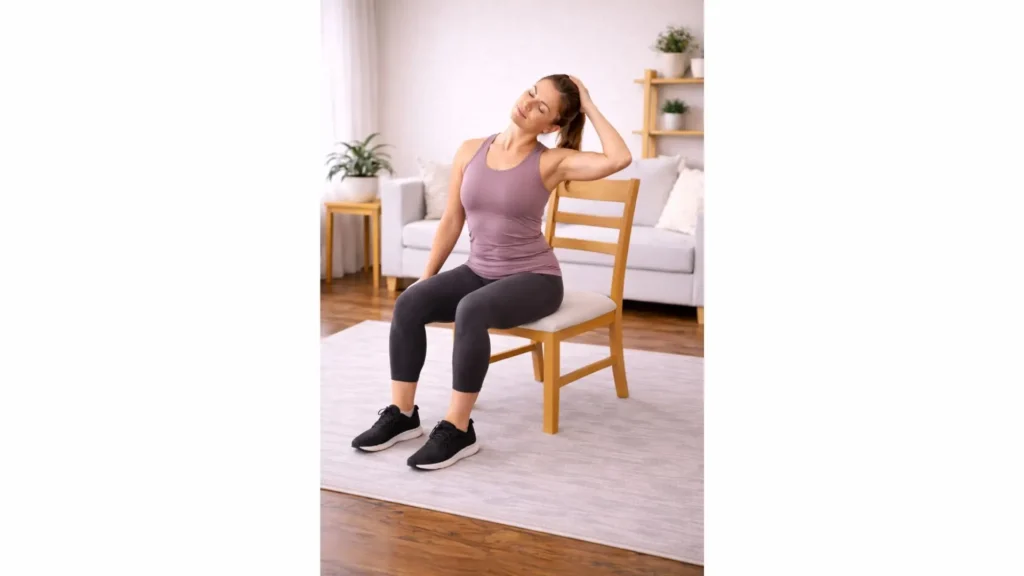
1. Seated Neck Stretch
Step-by-step:
- Sit upright.
- Gently drop your right ear towards your right shoulder.
- Keep shoulders relaxed.
- Hold for 4–6 slow breaths.
- Switch sides.
Why it helps:
Stress often shows up in the upper trapezius muscles. This stretch reduces tension and encourages deeper breathing.
2. Shoulder Rolls
Step-by-step:
- Inhale and lift shoulders towards ears.
- Exhale and roll them back and down.
- Repeat 8–10 times.
- Reverse direction.
Why it helps:
Improves circulation and counteracts rounded posture from screen time.
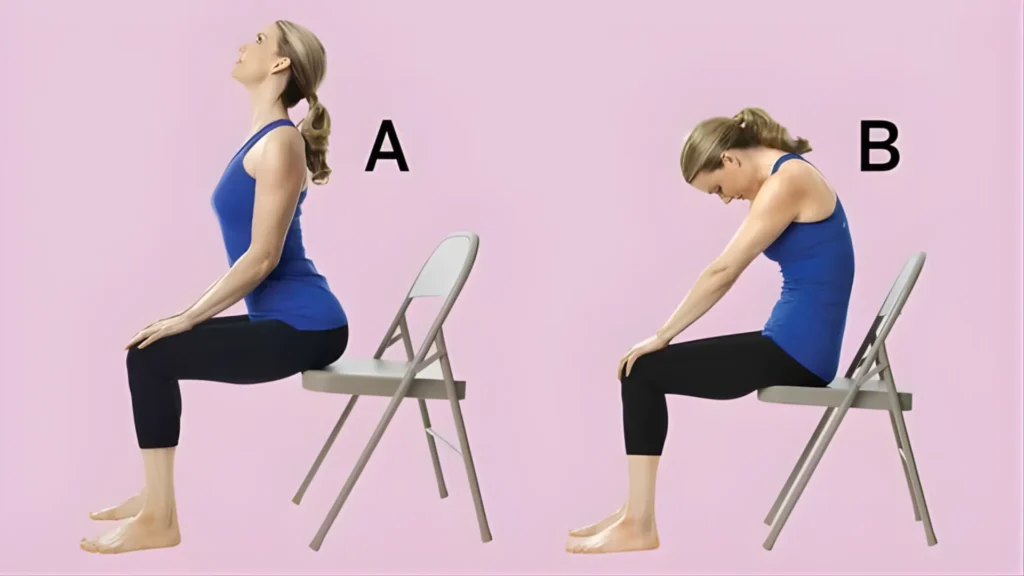
3. Seated Cat-Cow (Spinal Mobility)
Step-by-step:
- Place hands on thighs.
- Inhale, lift your chest, and gently arch your back.
- Exhale, round the spine and tuck the chin towards the chest.
- Repeat slowly for 8–10 breaths.
Why it helps:
Mobilises the spine and reduces stiffness in the lower and mid-back.
This movement alone can change how someone feels in under two minutes. I’ve used it with clients before strength sessions to reset posture and calm their breathing.
Breathing Techniques for Relaxation & Anxiety Reduction
Breathing is the foundation of all yoga, including chair yoga exercises.
Most people breathe into their chest when stressed. What we want is diaphragmatic breathing — slow, controlled and deep.
1. 4-6 Relaxation Breathing
Step-by-step:
- Sit tall.
- Inhale through the nose for 4 seconds.
- Exhale slowly for 6 seconds.
- Repeat for 2–3 minutes.
Why it works:
Longer exhalations activate the vagus nerve and reduce heart rate.
2. Box Breathing (Used in Performance Coaching)
This is something I use with athletes before competition.
Step-by-step:
- Inhale for 4 seconds.
- Hold for 4 seconds.
- Exhale for 4 seconds.
- Hold for 4 seconds.
- Repeat for 4 rounds.
It’s powerful for managing nerves and grounding the mind.
Incorporating breathing into your chair yoga routine isn’t optional — it’s essential. Movement calms the body. Breath calms the mind.
Seated Twists & Forward Bends for Circulation & Emotional Release
These movements go slightly deeper while still being gentle and safe.
1. Seated Spinal Twist
Step-by-step:
- Sit upright.
- Place your right hand on the back of the chair.
- Left hand on right thigh.
- Inhale to lengthen the spine.
- Exhale and gently twist to the right.
- Hold for 4–6 breaths.
- Switch sides.
Why it helps:
Twists support spinal mobility and digestion while encouraging mindful breathing.
2. Seated Forward Fold
Step-by-step:
- Sit tall.
- Hinge at the hips.
- Fold forward, letting arms hang.
- Relax the neck.
- Hold for 5–8 breaths.
Why it helps:
Forward folds are calming for the nervous system. They create a natural inward focus, which can ease anxious thoughts.
For those doing chair exercises for seniors, this can be modified by resting forearms on thighs rather than folding deeply.
Creating a Simple Chair Yoga Routine at Home or Work
You don’t need a full hour.
A structured chair yoga workout can take just 10–15 minutes.
Here’s a sample routine:
| Time | Exercise |
| 2 mins | 4-6 breathing |
| 2 mins | Shoulder rolls + neck stretch |
| 3 mins | Seated cat-cow |
| 3 mins | Seated twist (both sides) |
| 3 mins | Forward fold + slow breathing |
This works brilliantly during:
- Lunch breaks
- Mid-afternoon slumps
- Before bed
- Before stressful meetings
Tips for a Relaxing Environment
- Use a sturdy, non-wheeled chair.
- Keep feet flat and stable.
- Dim lights if possible.
- Play calm instrumental music.
- Switch off notifications.
Consistency matters more than duration.
From experience, clients who commit to short daily chair yoga routines see better long-term results than those who attempt long sessions once a week.
Chair Yoga for Seniors & Limited Mobility
I’m often asked whether armchair yoga for seniors is genuinely effective.
The answer is yes — when done safely and consistently.
For older adults:
- Focus on a gentle range of motion.
- Avoid forcing stretches.
- Keep movements slow and controlled.
- Prioritise breathing.
Chair yoga can support:
- Balance confidence
- Joint mobility
- Circulation
- Reduced stiffness
- Social connection (in group settings)
I once worked with a 72-year-old client recovering from a knee issue. Traditional gym training wasn’t appropriate at the time. We began with simple yoga from a chair, breathing drills and light seated mobility. Within months, her posture improved noticeably, and she reported less back discomfort during daily activities.
The key is meeting the body where it is.
Case Example: Stress Management Through Chair Yoga
One of my online coaching clients, a corporate manager, struggled with persistent anxiety and neck pain. He trained in the gym twice a week but felt constantly tense at work.
We added:
- 10-minute midday chair yoga exercises
- Box breathing before meetings
- Seated spinal mobility work
Within three weeks:
- Neck tension reduced
- Headaches decreased
- Sleep quality improved
The lesson? Fitness isn’t just about lifting heavier weights. Sometimes it’s about slowing down.
Final Thoughts: Small Movements, Big Impact
Stress doesn’t disappear overnight.
But small, consistent actions build resilience.
Chair yoga exercises are simple, accessible and surprisingly powerful. They calm the nervous system, improve posture, reduce muscle tension and create space to breathe — literally and mentally.
Whether you’re exploring armchair yoga, building structured chair yoga routines, or starting gentle yoga from a chair as part of recovery, the key is this:
Start small. Stay consistent. Pay attention to your breathing.
Movement doesn’t have to be intense to be meaningful.
Ready to get fit?
If you’d like more structured support beyond chair yoga, whether that’s Personal Training, Sports Performance coaching, Online Live Coaching, or in-depth Human Performance Testing, I’d be happy to help.
Ready to get fit? Explore our Personal Training and Online Live Coaching services to take your fitness journey to the next level!
FAQ’s
What are the best chair yoga exercises for stress relief?
The most effective movements include seated neck stretches, shoulder rolls, cat-cow spinal mobility, gentle twists and forward folds combined with slow breathing. The combination of breath and movement is what makes them powerful.
Can chair yoga help with anxiety?
Yes. Chair yoga activates the body’s relaxation response through controlled breathing and gentle mobility. Regular practice can lower heart rate, reduce muscle tension and improve emotional regulation.
How often should I practice chair yoga?
Ideally, 3–5 times per week. Even 10 minutes daily can make a noticeable difference. Consistency is more important than duration.
Is chair yoga suitable for seniors?
Absolutely. Chair exercises for seniors, including armchair yoga, are safe and accessible when done with proper technique. They’re particularly useful for those with limited mobility or balance concerns.
Do I need any equipment for chair yoga?
No specialist equipment is required. Just a stable chair. Optional additions include a cushion for comfort or light resistance bands for progression.